
Academics
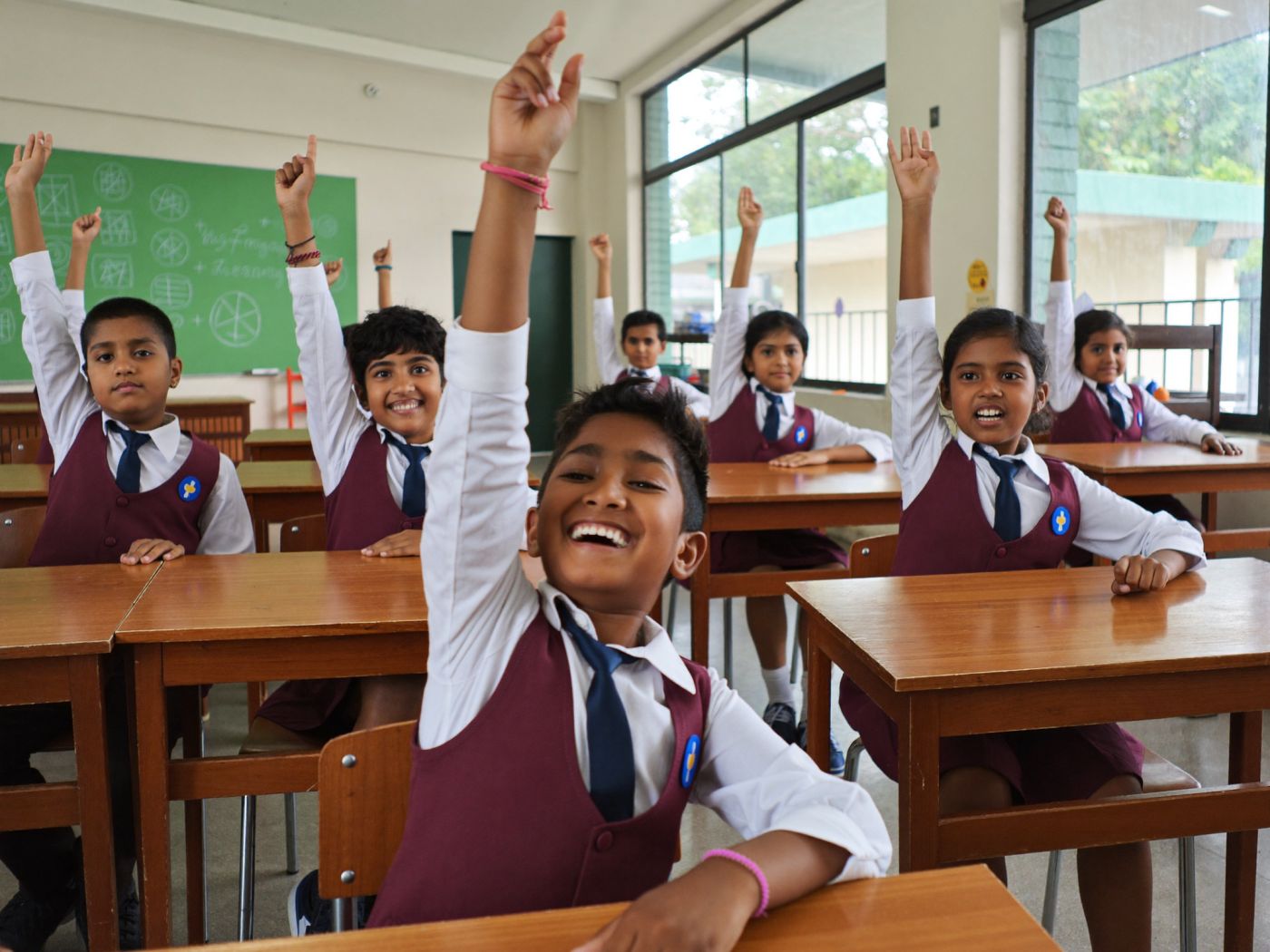
A CBSE curriculum taught the way children learn best — in small classes, by teachers who know each student, from kindergarten right through to Class XII.
Teaching that builds understanding, not just marks
We follow the CBSE curriculum in full, but the way it is delivered is our own: concepts are introduced practically, revisited in writing, and then tested — in that order. Rote learning is treated as a warning sign, not a study method.
Teachers plan in subject teams and meet weekly to compare how a topic landed across sections, so a class that struggled with one chapter gets re-taught rather than left behind.
- Continuous assessment, with written feedback each term
- Remedial and enrichment slots built into the timetable
- Smart classrooms from Class I upwards
- English, Tamil and Hindi taught to board standard
Five stages, one continuous path
Each stage has its own rhythm and its own measure of progress — but the transitions are planned, so nothing is lost between them.
Kindergarten
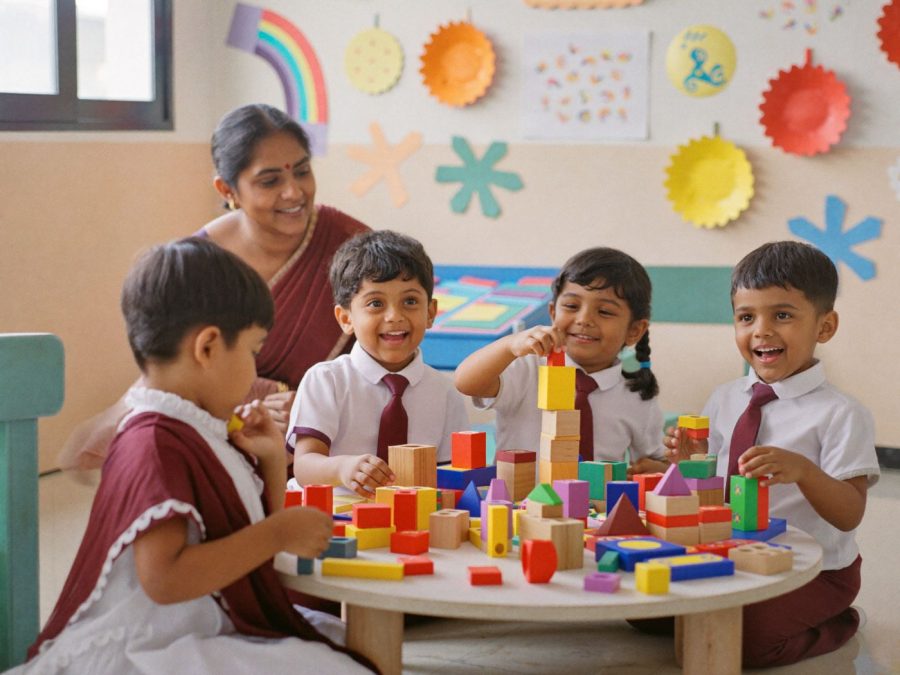
LKG & UKG — play-led learning, phonics and early numeracy.
Primary
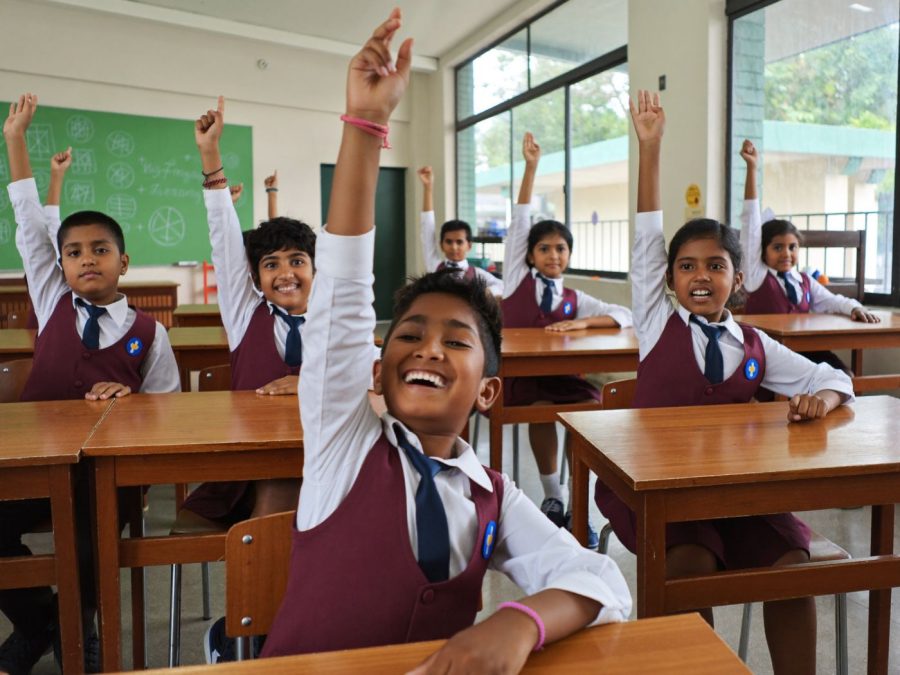
Classes I–V — reading fluency, number sense and curiosity.
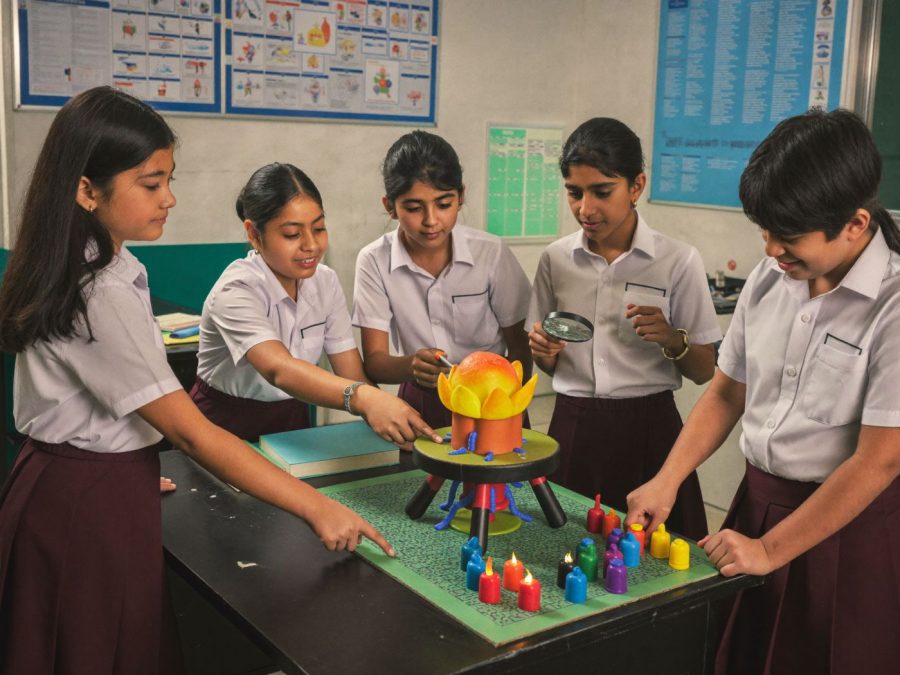
Middle School
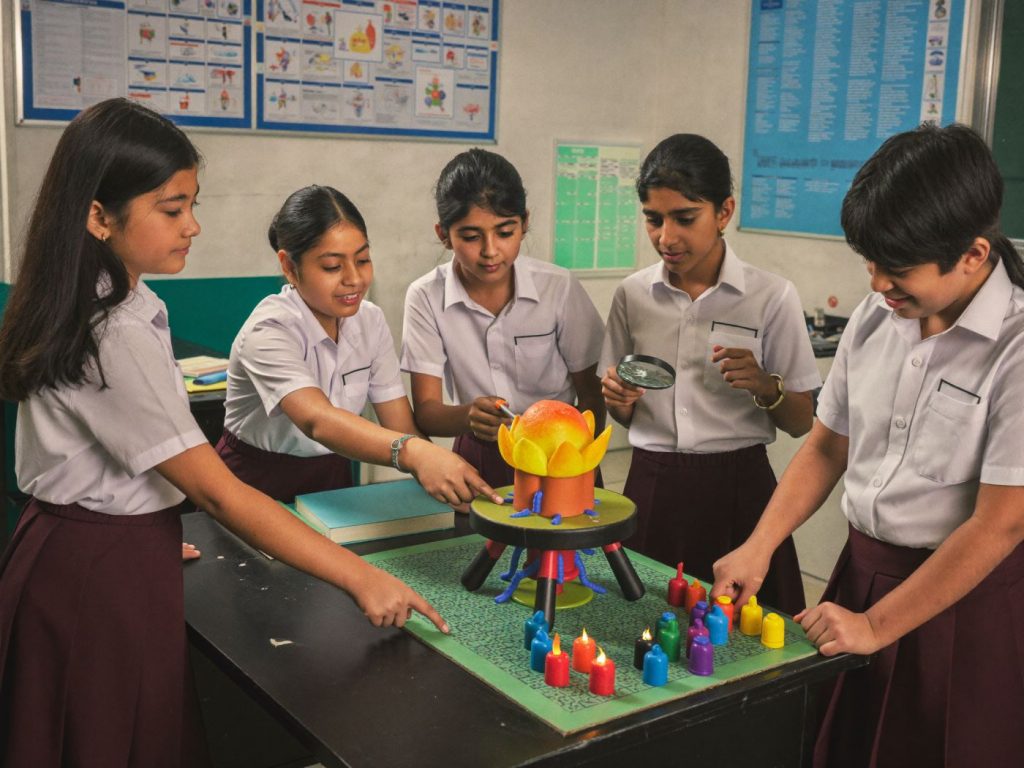
Classes VI–VIII — subject specialists and lab work begin.
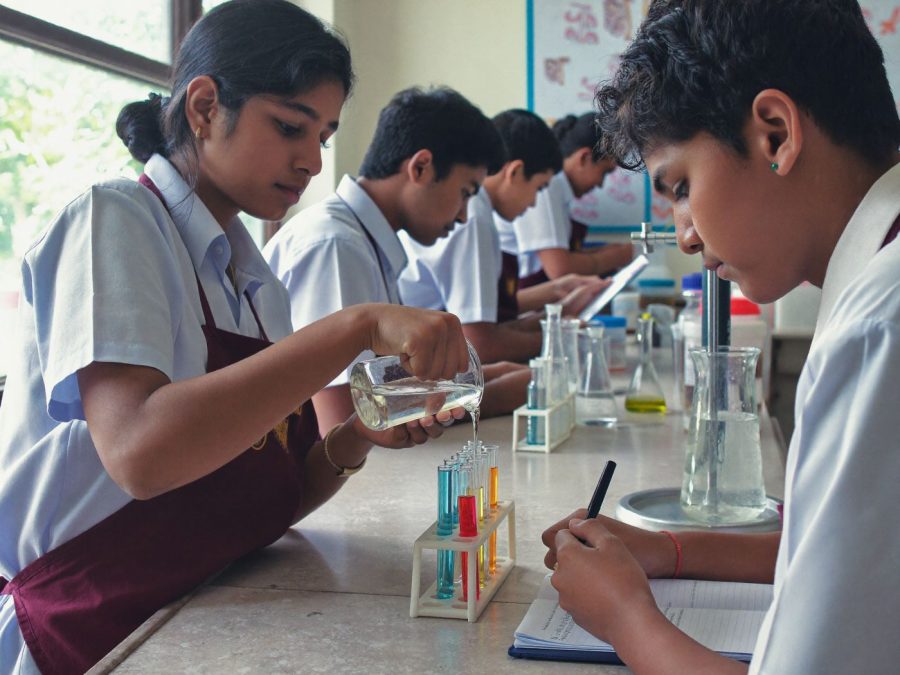
Secondary
Classes IX–X — board preparation with structured revision.
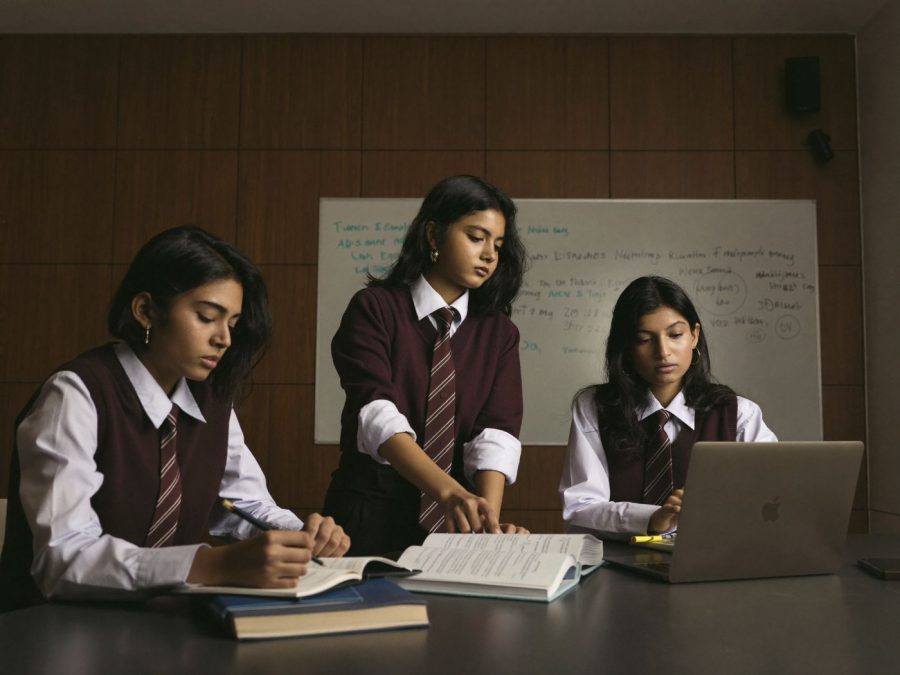
Higher Secondary
Classes XI–XII — Science and Commerce streams with guidance.
Streams and subject combinations
Students choose a stream at the end of Class X, after a counselling session with parents, the class teacher and our careers lead.
| Stream | Core subjects | Optional fourth / fifth |
|---|---|---|
| Science — Biology | Physics, Chemistry, Biology, English | Mathematics or Psychology |
| Science — Computer Science | Physics, Chemistry, Mathematics, English | Computer Science |
| Commerce — Mathematics | Accountancy, Business Studies, Economics, English | Mathematics |
| Commerce — Informatics | Accountancy, Business Studies, Economics, English | Informatics Practices |
Subject combinations run subject to a minimum class size. Final allotment is confirmed after the Class X board results.
How our students finished
What else a GRT student learns
Programmes that run inside school hours, so every child takes part — not only those who can stay back.
Robotics & Coding
Block coding from Class IV, Python and microcontrollers in the Atal Tinkering Lab.
Arts & Music
Bharatanatyam, carnatic vocal, keyboard and visual arts, taught by visiting artists.
Career Guidance
Aptitude profiling from Class IX, with counselling ahead of stream selection.
Life Skills
Weekly sessions on communication, digital safety and emotional wellbeing.
Reading Programme
A graded library period for every class up to VIII, with termly reading targets.
Olympiads & Contests
In-school coaching for NSO, IMO, NSTSE and inter-school competitions.
Academics, answered
Which board does the school follow?
We are affiliated to the Central Board of Secondary Education (CBSE), New Delhi, affiliation number 1930174, and follow the NCERT curriculum across all classes.
How large is a class?
Sections are capped at 32 students. Where a cohort is larger, we open an additional section rather than stretch an existing one.
What languages are offered?
English is the medium of instruction. Tamil and Hindi are both offered as second languages from Class I, and either may be continued to board level.
How is a struggling student supported?
Class teachers flag a concern after the first unit test. The student joins a remedial slot during the timetabled support period, and parents are met within a fortnight — not at the end of the term.
Is there homework every day?
Kindergarten has none. Primary classes get short practice work, and the load increases gradually so that Classes IX–XII build the independent study habit the boards require.
See a lesson for yourself
We welcome parents into live classrooms on weekday mornings. Come and watch how a period actually runs before you decide.