Training Programmes
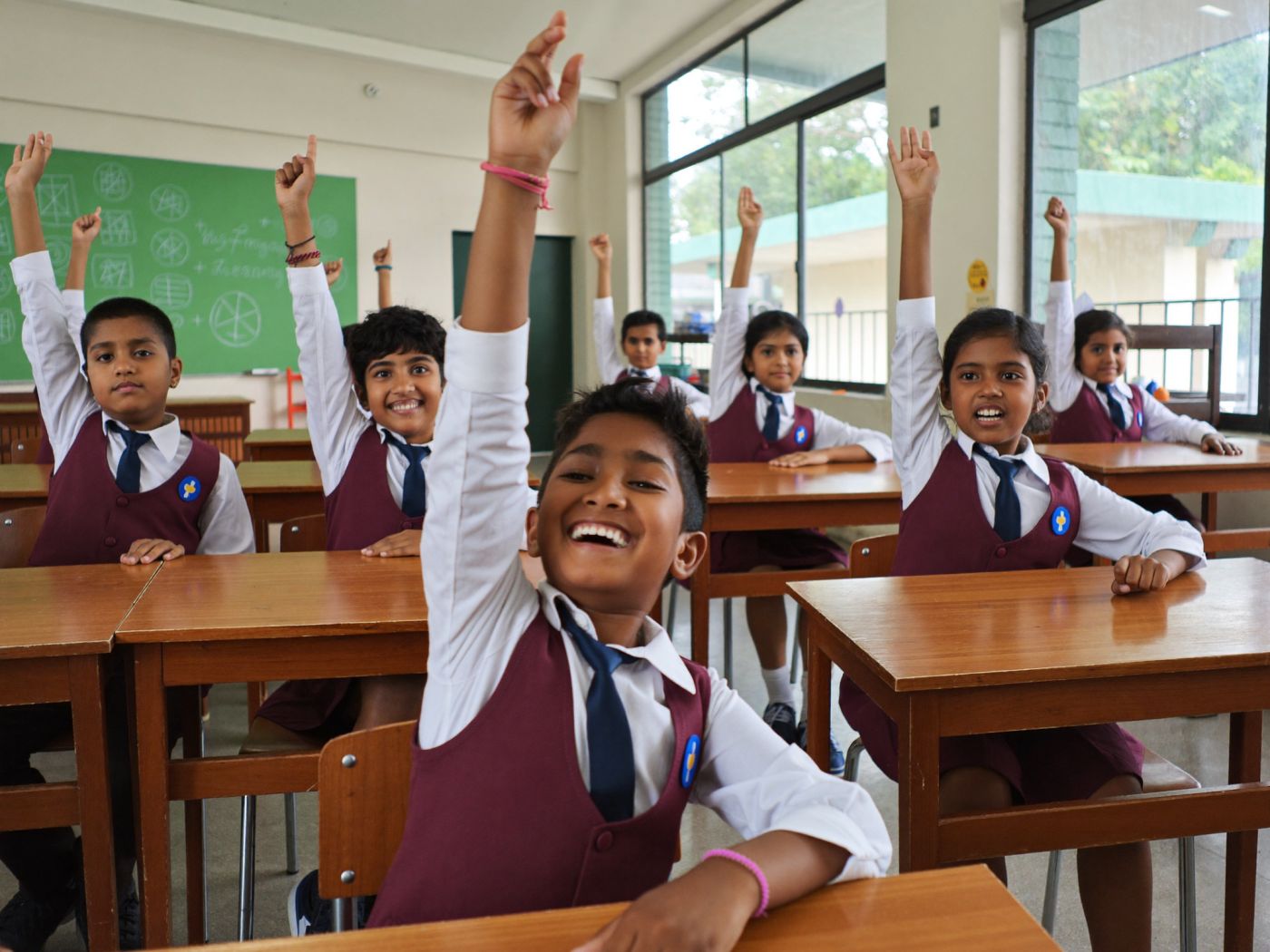
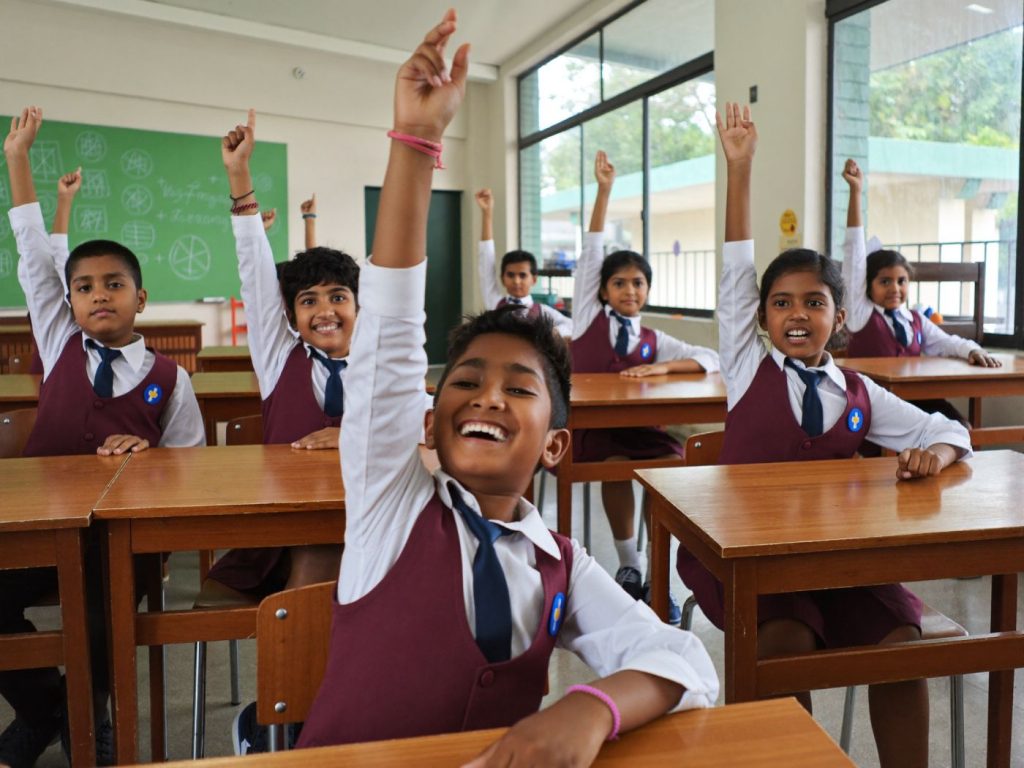
Structured training on both sides of the desk — professional development for our teachers, and skills programmes that sit inside the school day for our students.
Faculty training programmes
Professional development programmes create a panel of teachers who stay aware of the latest developments in technology and pedagogy. Proper training makes a teacher more effective in the classroom — and gives them a career worth refining.
- Regular pedagogy and technology workshops
- Subject teams that plan and review together
- Training that counts towards a teacher's own progression
Teacher training for the pre-primary years
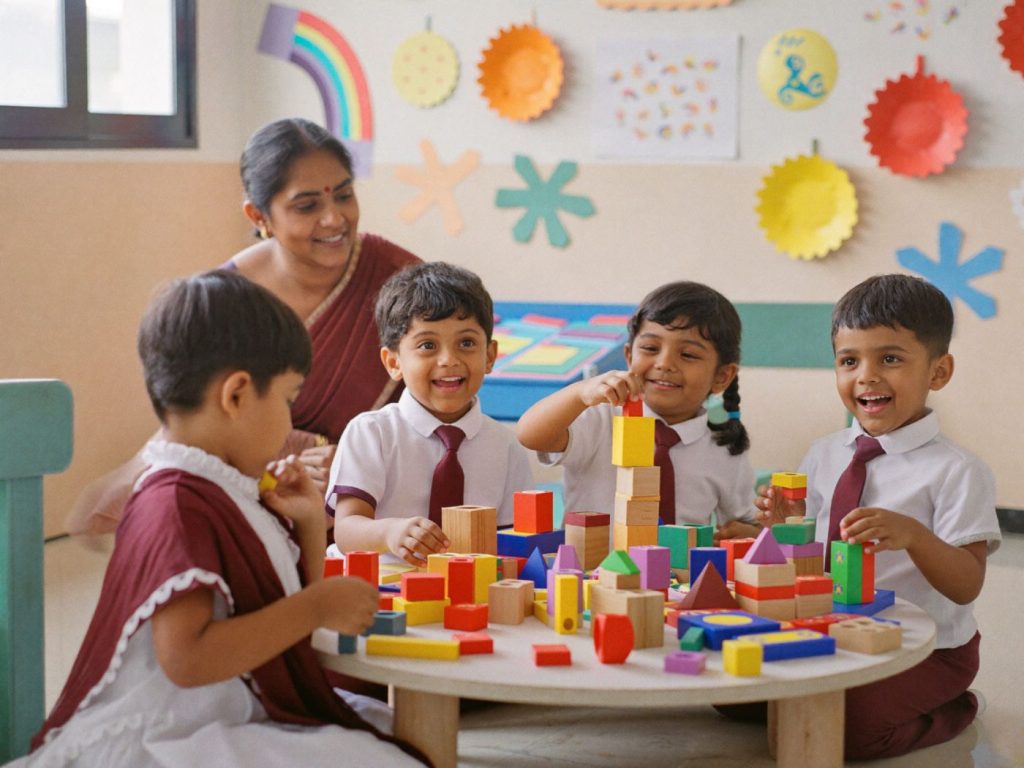
If you are starting out as a teacher, or broadening your horizon as a professional in the pre-primary segment, you need to develop your skills and understand how the youngest learners actually learn.
The GRT KG Academy for Teachers offers an International Teaching Diploma Programme in live online mode. Trainees can study from home — saving time and cost — while live sessions give them real interaction with trainers and peers. The courses are comprehensive, covering the theories and methods of early-years education, and are built to bring creativity and innovation into a trainee’s own teaching.
- Pre and Primary Teacher Training (PPTT)
- Montessori Teacher Training (MTT)
- Nursery Teacher Training (NTT)
- Early Years Care & Education (EYCE)
- Online learning combined with periodic classroom sessions
Skills programmes inside the school day
These run during school hours, so every student takes part — not only those who can stay back.
Know Your Leader
Student leaders who excel in academics and co-curricular life are given the responsibility of inspiring others — and of hearing and resolving their peers' concerns.
Student Focus
An integrated, multidisciplinary curriculum combined with the creative arts, engaging children physically, cognitively and emotionally.
Artificial Intelligence
An integrated AI programme that introduces students to the concepts early, through block-based coding and interactive activity.
Keyboarding Skills
Touch typing taught at school level — the ability to type smoothly with every finger, without looking at the keyboard.
Public Speaking
Structured practice at speaking to an audience — from class presentations to assembly and inter-school competition.
Life Skills Education
Tools to manage emotions, build self-awareness, communicate well and handle relationships — tied closely to the academic programme.
Physical Education
Throw-ball, volleyball, basketball, yoga and athletics — improving fitness while teaching discipline, perseverance and teamwork.
How these programmes run
Artificial Intelligence
A unique integrated AI programme helps students become well acquainted with technology, and stretches their imagination and creativity. The platform gives them real-life exposure to AI concepts at an early stage of life, introduced through methods such as block-based coding, with interactive activities at every step.
Keyboarding Skills
We were among the first to teach keyboarding skills at school level — the ability to type smoothly with all available fingers, without looking at the keyboard. The skill has become inevitable in education and in most careers, and there is a widely held conviction that typing acquired early also supports a student’s acquisition of the English language.
Life Skills Education
The life skills and counselling component is closely linked to the academic programme, so that learning stays relevant and fits the whole of a student’s needs. Students gain leadership skills by leading life-skills lessons themselves, and learn tools that help them manage their emotions, become more self-aware, communicate effectively and handle interpersonal relationships.
Physical Education
PE is an integral part of the school programme: it improves physical condition while teaching discipline, perseverance, teamwork and stress management. The curriculum emphasises skill development so that students can compete across a range of sports. Physical activity and fitness improve health and academic achievement alike, and have a direct effect on social behaviour and overall development. Students take part in throw-ball, volleyball, basketball, yoga and athletics.
Training that shows up in the classroom
Ask us how any of these programmes runs, who leads it, and what your child will actually do in a term.